
The Week in One Sip
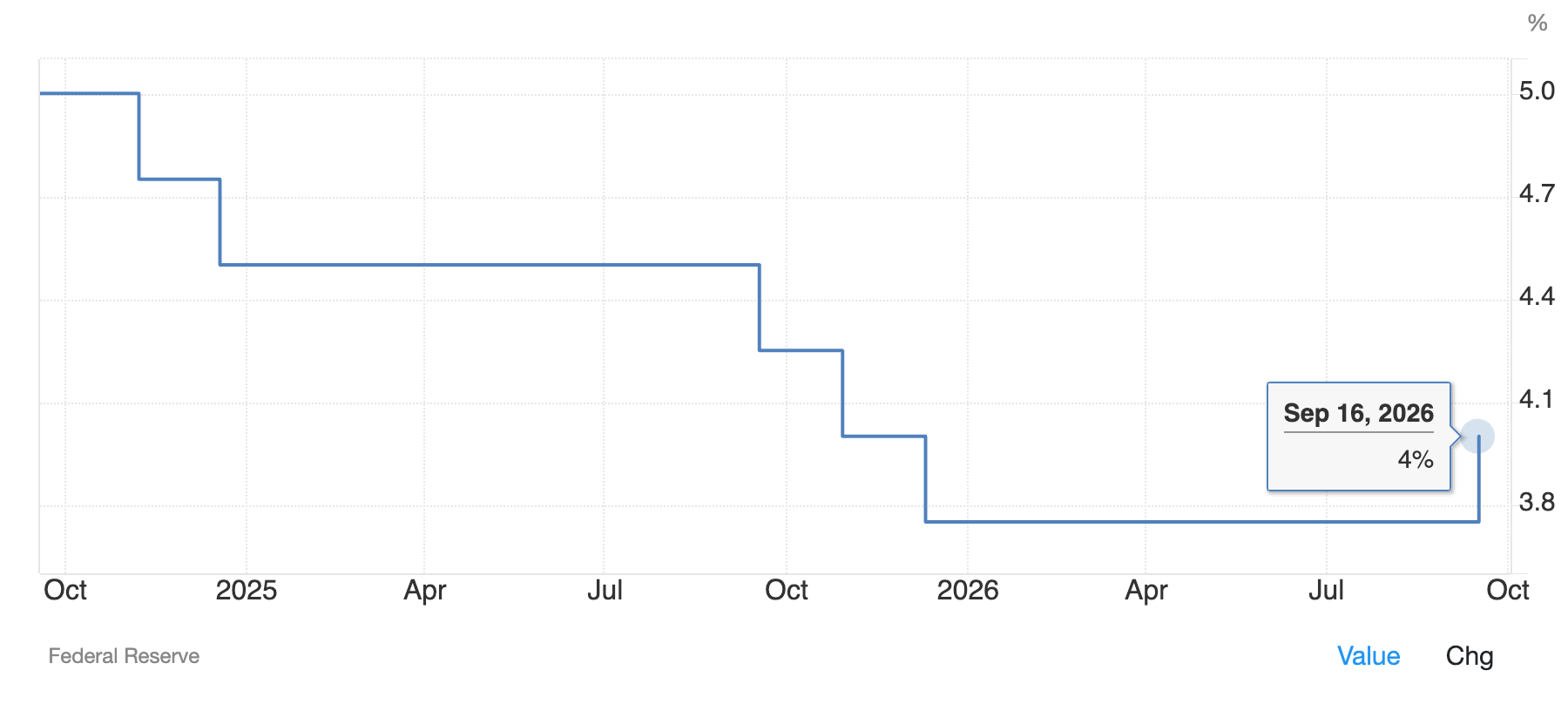
The Federal Reserve raised its interest rate on Wednesday for the first time in three years, to a range of 3.75 to 4.00 per cent. Kevin Warsh, who runs it, then spent the press conference making clear that more may follow soon. The Dow fell 800 points while he spoke.
Thursday belonged to London. The Bank of England left its rate at 3.75 per cent and announced it would stop selling the government bonds it had bought years earlier — a decision that removes a steady seller from the market and pushed British borrowing costs down sharply.
Friday was all about Tokyo. The Bank of Japan lifted its policy rate to 1.25 per cent, the highest since 1995, three months after its last increase. Two of the nine board members voted against. The yen fell anyway.
Underneath all three sits one number that moved in the opposite direction from everything else. What America pays to borrow for thirty years ended the week one basis point lower — a basis point being one hundredth of a percentage point — while two-year money rose eleven.
The Scoreboard
Nineteen numbers, and the ones that matter are all in the American bond block.
The thing to look for is the gap between the short and the long end. When two-year money rises hard and thirty-year money does not, the market is saying it expects tight policy soon and something weaker later.
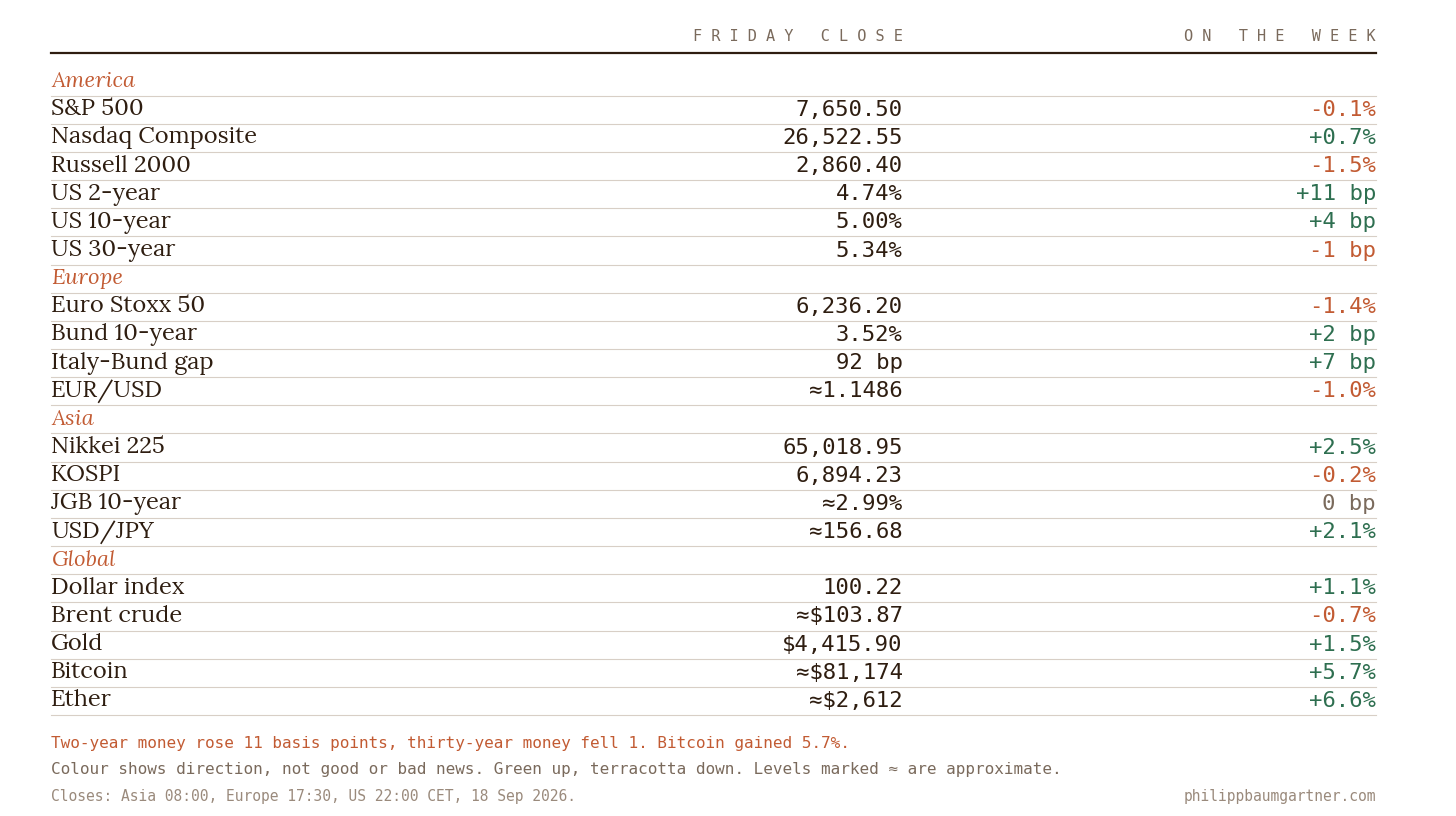
America looks flat and wasn’t. The S&P 500 ended the week 0.1 per cent lower, which hides a Wednesday sell-off and a Thursday recovery. The Dow lost 1.7 per cent, its worst week since March. The Nasdaq gained 0.7 per cent, carried almost entirely by the largest technology companies, while the Russell 2000 — smaller American firms, who borrow at floating rates and feel a central bank first — fell 1.5 per cent.
Europe had the worst Friday. The Euro Stoxx 50, which tracks the fifty largest listed companies in the euro area, lost 1.4 per cent, and money moved out of every euro government bond except Germany’s. What Italy pays above Germany widened seven basis points to 92. France went further: its ten-year borrowing cost now sits 105 basis points above Germany’s, the widest since 2012, and after the close the rating agency Scope cut France one notch to A+.
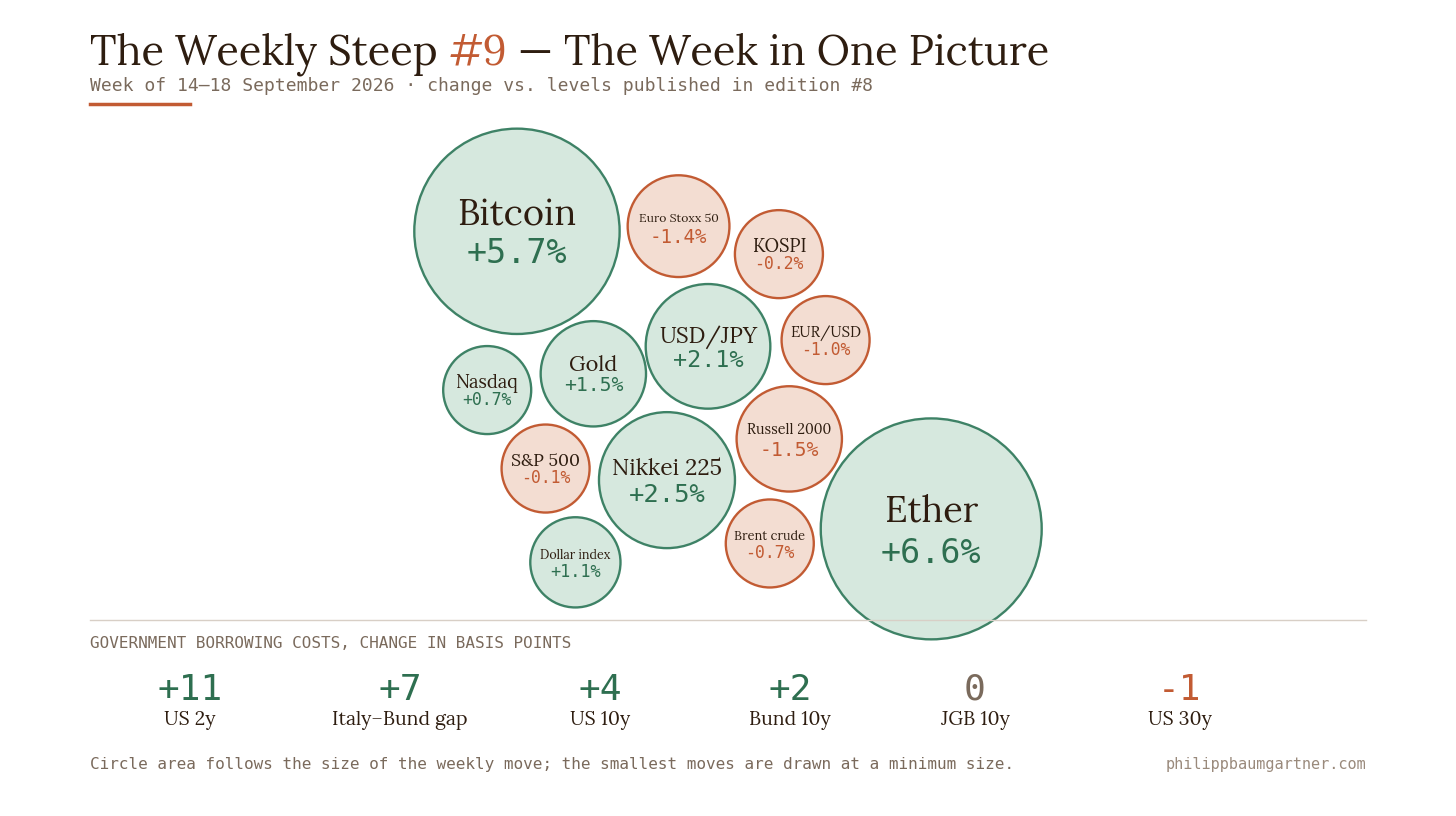
Asia did the opposite of what a textbook would predict. Japan raised rates and the yen weakened, ending near 156.7 per dollar, about 2.1 per cent softer. The Nikkei 225 rose 2.5 per cent to 65,018.95. Korea’s KOSPI jumped 2.7 per cent on Friday alone and still finished the week slightly lower, at 6,894.23.
1. The Fed raised rates and thirty-year borrowing got cheaper
Wednesday’s increase was fully priced before it happened. What moved markets was the projection sheet published alongside it: slightly stronger growth, slightly higher inflation, and a higher path for the policy rate than officials had sketched in June.
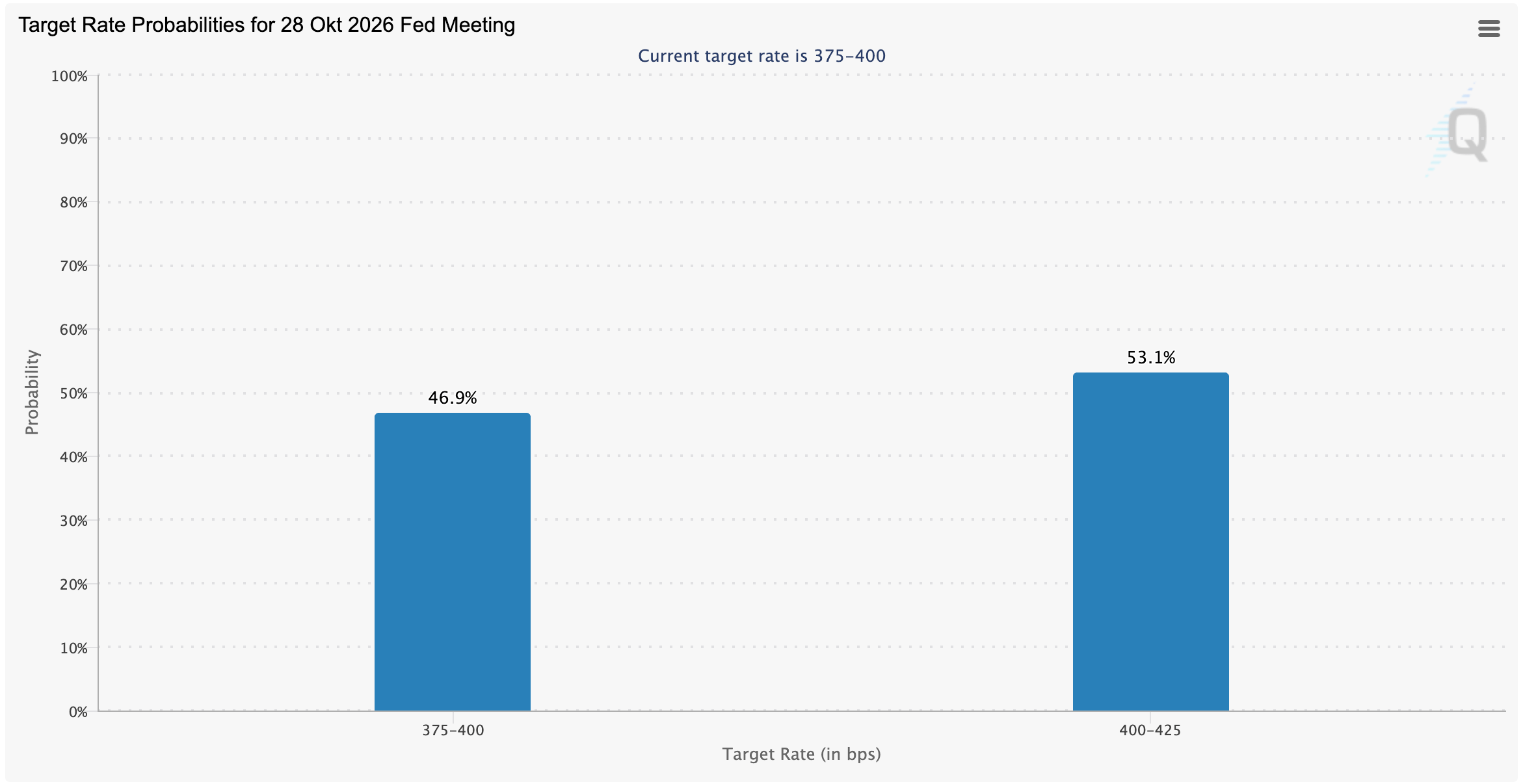
Traders now put the chance of another increase in October at roughly one in two, with some measures nearer 58 per cent. That meeting falls one week before the midterm elections, which is its own kind of problem.
Look at what happened across the maturities. Two-year borrowing costs rose eleven basis points to 4.74 per cent. Ten-year rose four, to exactly 5.00 per cent. Thirty-year fell one, to 5.34 per cent. The gap between two-year and ten-year money is down to about 25 basis points, the narrowest this year.
Two-year rates mostly reflect what the central bank is expected to do over the next couple of years. Thirty-year rates reflect something slower: how much debt is being sold, who wants to hold it, and what inflation might average over a working lifetime. When the first rises and the second does not, the market is pricing tighter money now and a weaker economy later.
The honest objection is that this reads too much into one shape. Thirty-year yields have been pinned high all year by the sheer volume of debt America is issuing, and a curve can flatten because the long end is heavy rather than because growth is fading. Foreign holdings of Treasuries fell 50 billion dollars in July, to 9.25 trillion — the fourth monthly decline in five. That is a supply story, not a recession signal.
My own lean is that the flattening is real and worth taking seriously. What would change my mind is the thirty-year rising back toward 5.5 per cent while the two-year holds: that would tell you the long end was simply catching up, and the message I am reading into it was never there.
2. Britain stopped selling, and gilts noticed
The Bank of England did the expected thing with its interest rate and an unexpected thing with its balance sheet.
Between 2009 and 2021 the bank bought hundreds of billions of pounds of British government bonds. Since 2022 it has been selling them back into the market, a process that adds a large, predictable, price-insensitive seller on top of everything the Treasury already issues. On Thursday it stopped.
Gilt yields fell immediately. The thirty-year dropped ten basis points to 5.76 per cent, its biggest one-day fall since May. Removing a seller raises the price of what remains, and bond prices and yields move in opposite directions.
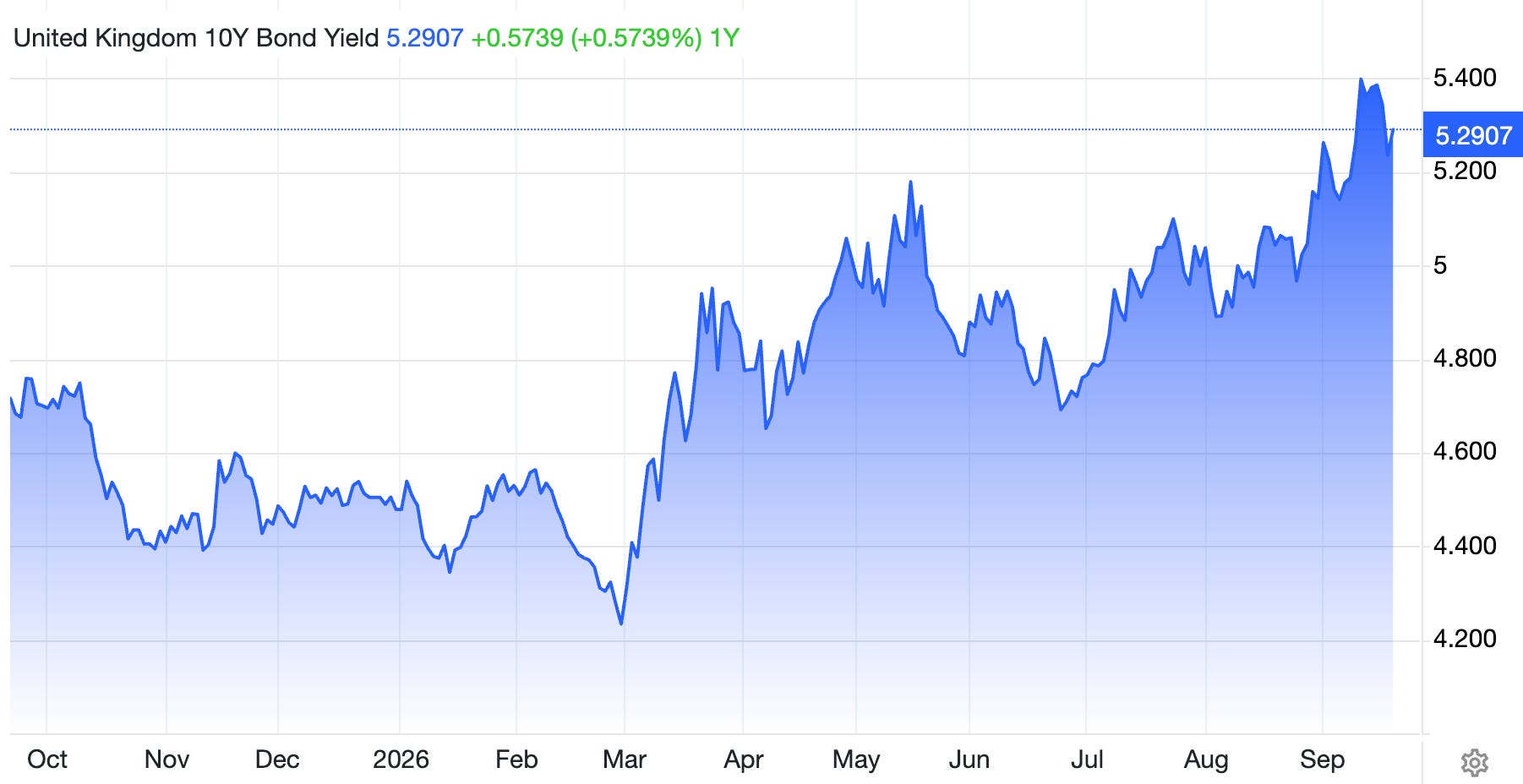
British inflation had come in at 3.1 per cent for August the previous morning, up from 2.6 per cent, which made the hold a harder call than it looked. The bank’s answer was to keep the rate steady and ease the pressure elsewhere. Whether that counts as tightening or loosening depends on which lever you think matters more.
3. Japan raised rates and the yen fell
For three decades money has been borrowed cheaply in yen and invested in things that pay more elsewhere. Higher Japanese rates narrow that gap and, in theory, pull some of that money home — which would lift the yen.
Friday did the reverse. The yen weakened past 157 during the session before settling near 156.7.
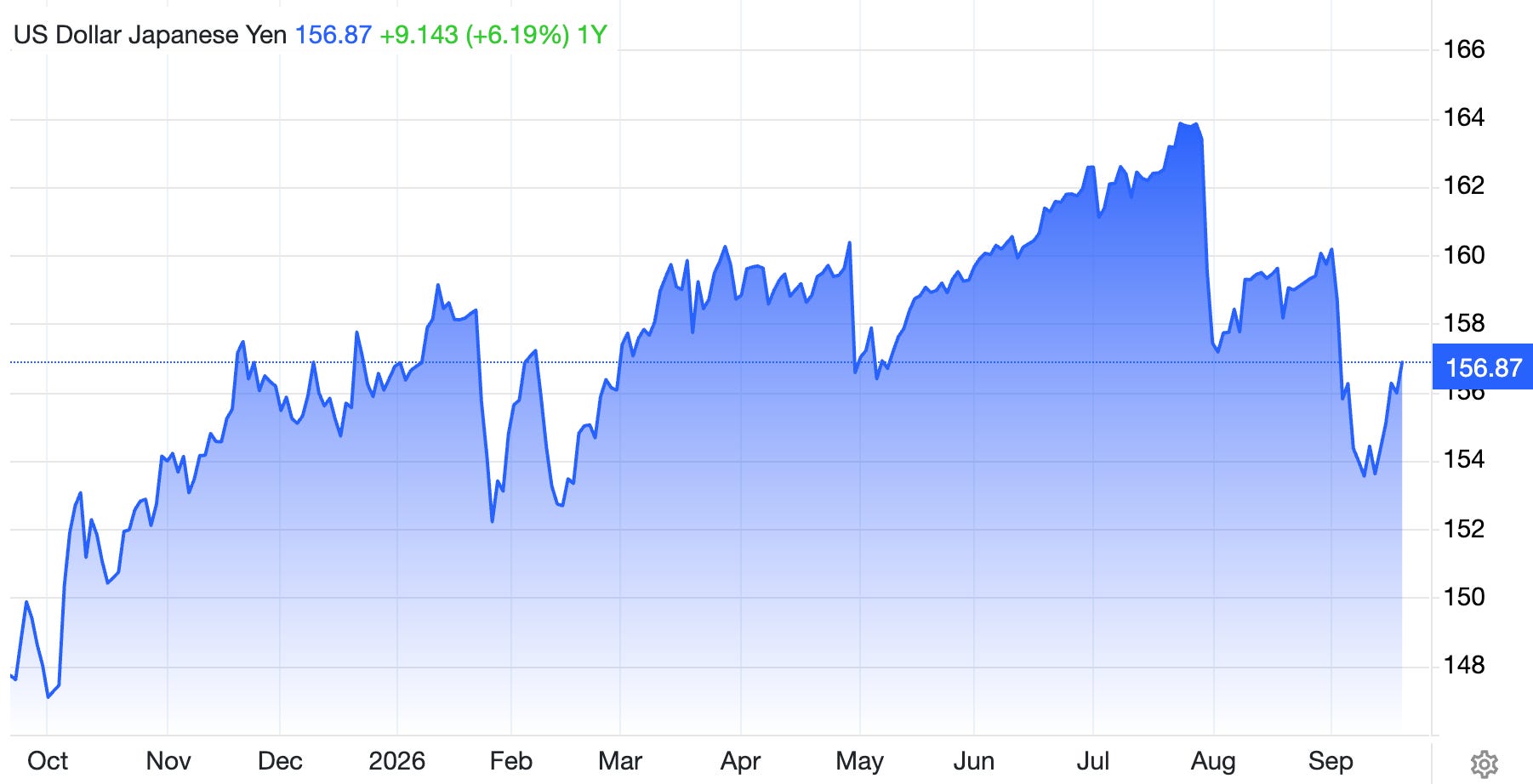
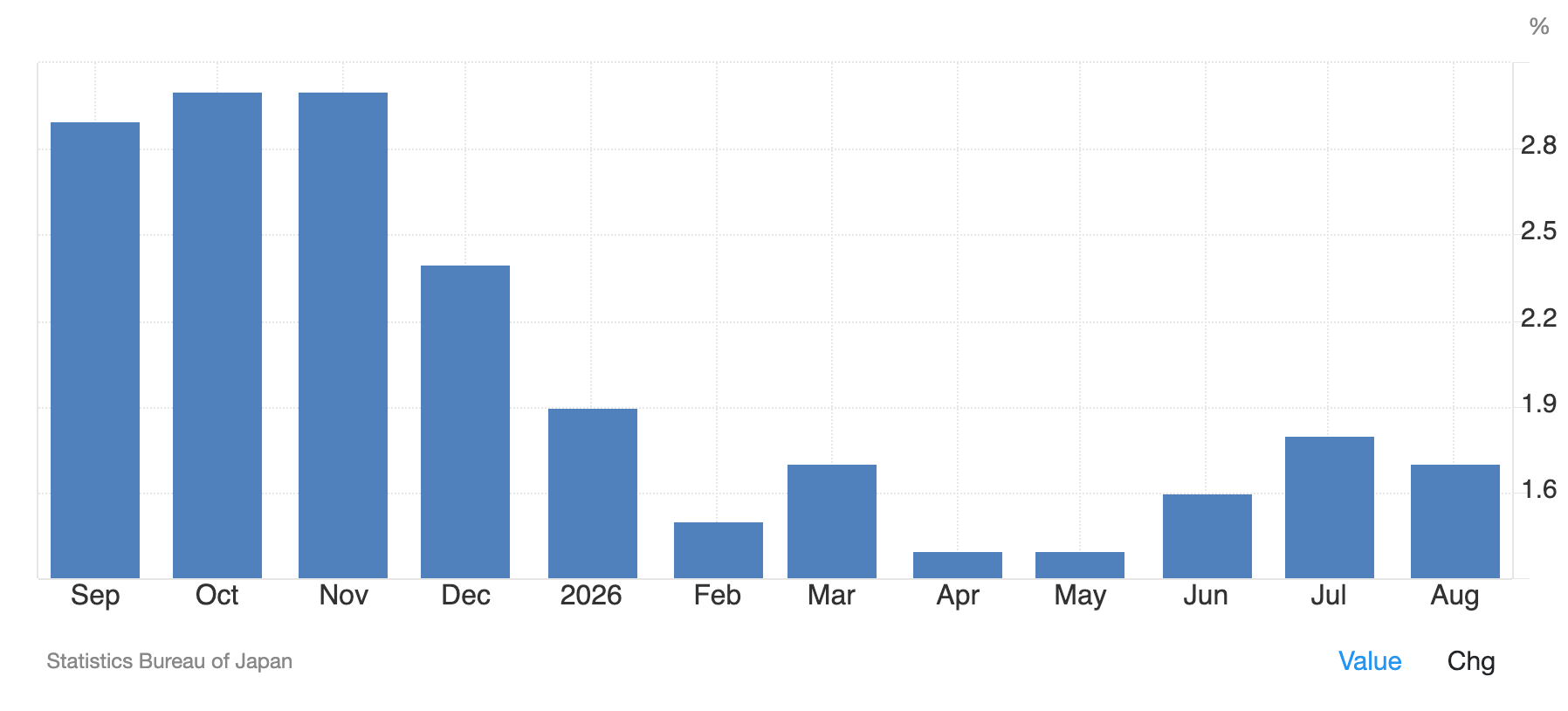
Two things explain it. The vote split seven to two, with dissenters arguing that core inflation, at 1.7 per cent in August, still sits below the two per cent target. And Governor Kazuo Ueda declined to signal anything about the next move. A rate increase delivered without a promise of more is read as the end of something rather than the start.
That reading matters beyond Tokyo. Japanese retail investors held roughly 24 billion dollars in bets against their own currency last week. If the Bank of Japan does turn more aggressive — the next meeting is 29 and 30 October, with fresh forecasts attached — those positions unwind fast, and the unwinding shows up as selling in New York and Frankfurt.
Data Check
Nine scheduled events, and the three that carried the most weight all landed exactly where forecasters said they would.
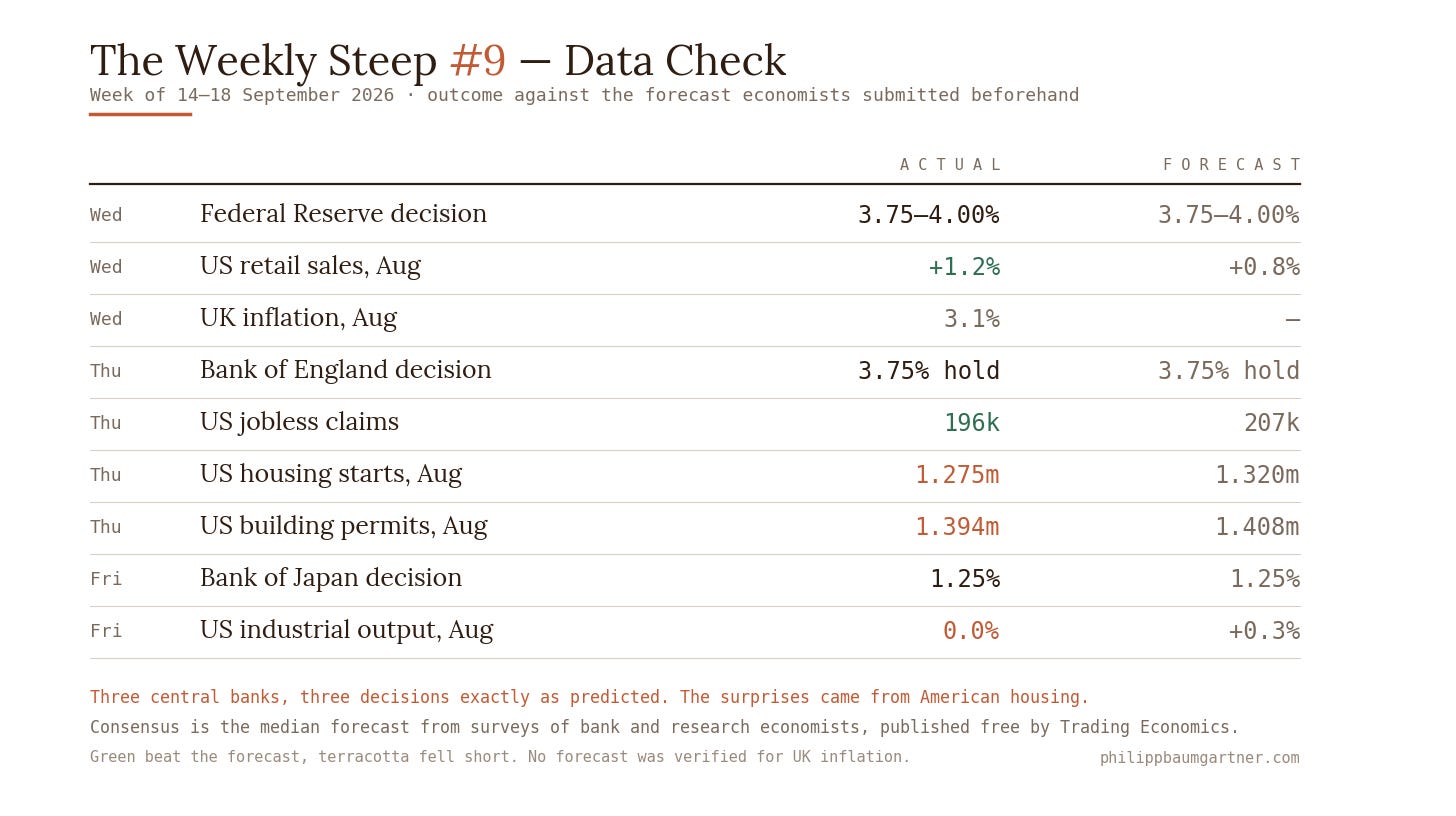
The rows worth a second look are the American housing pair. Starts came in at 1.275 million against 1.320 million expected, permits at 1.394 million against 1.408 million, and homebuilder confidence is near its Covid lows. Those are the first numbers to soften when borrowing costs rise, and they softened in the same week the Fed promised more of them.
Against that, American consumers spent 1.2 per cent more in August than in July, the strongest month in five, and new claims for unemployment benefit fell to 196,000 — the lowest in 57 years. An economy where housing cracks while spending and hiring hold up is the awkward middle that central bankers find hardest to read.
The Credit Grind
European governments have never paid more to borrow in the past year than they did this week. What companies pay on top of that barely moved.
Anyone lending to a company is paid for two things. One is the price of money itself, which governments set, because a state is the safest borrower in its own currency. The other is compensation for the chance this particular company stops paying. The board below separates the two.
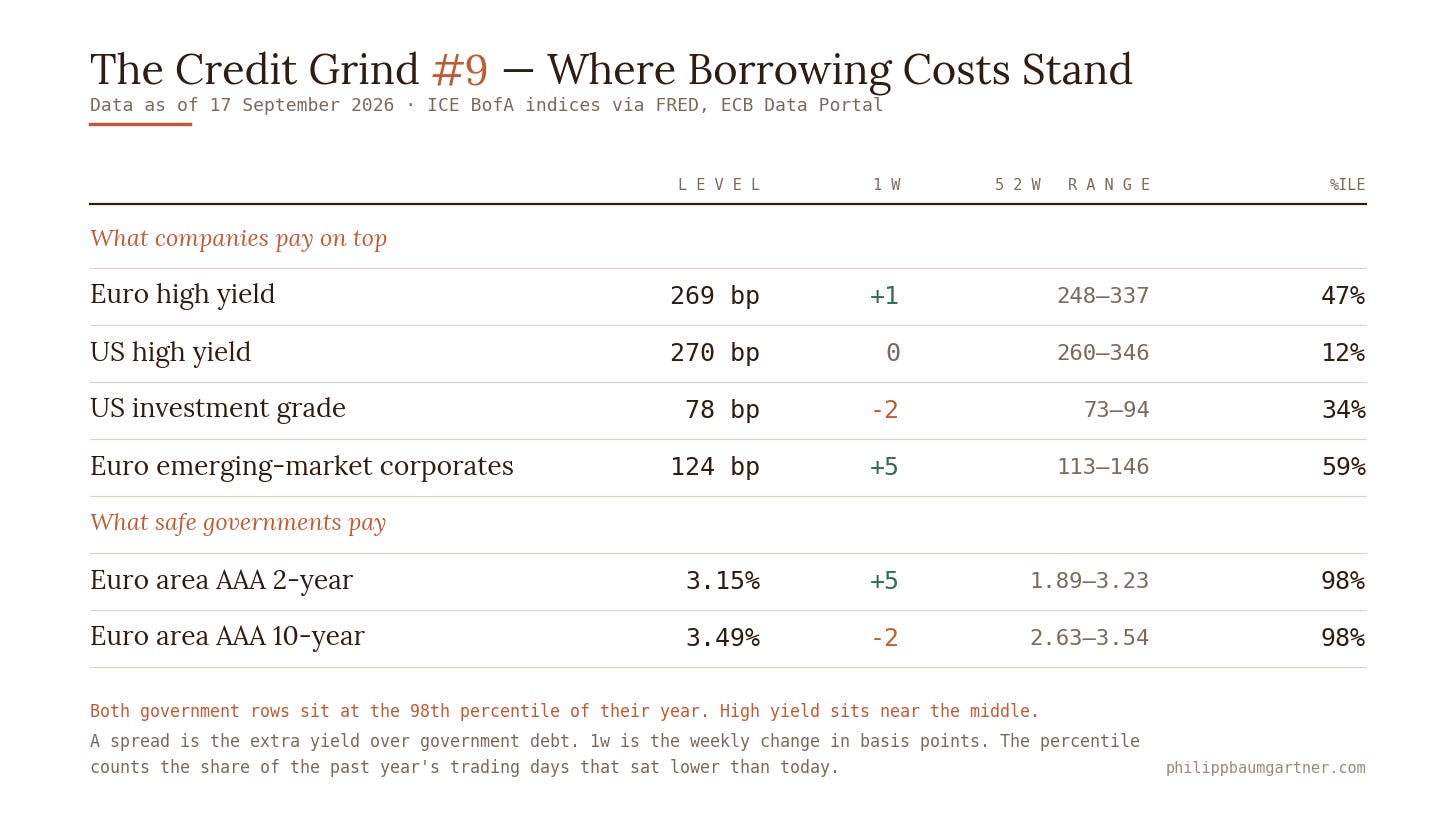
Both euro government rows read 98 per cent. Two-year money in the euro area costs 3.15 per cent, up 104 basis points since January.
Now the company rows. European high yield — the debt of firms rated least likely to repay — rose one basis point to 269, the 47th percentile of its year. American high yield did not move at all, sitting at 270. The gap between the two continents is one basis point.
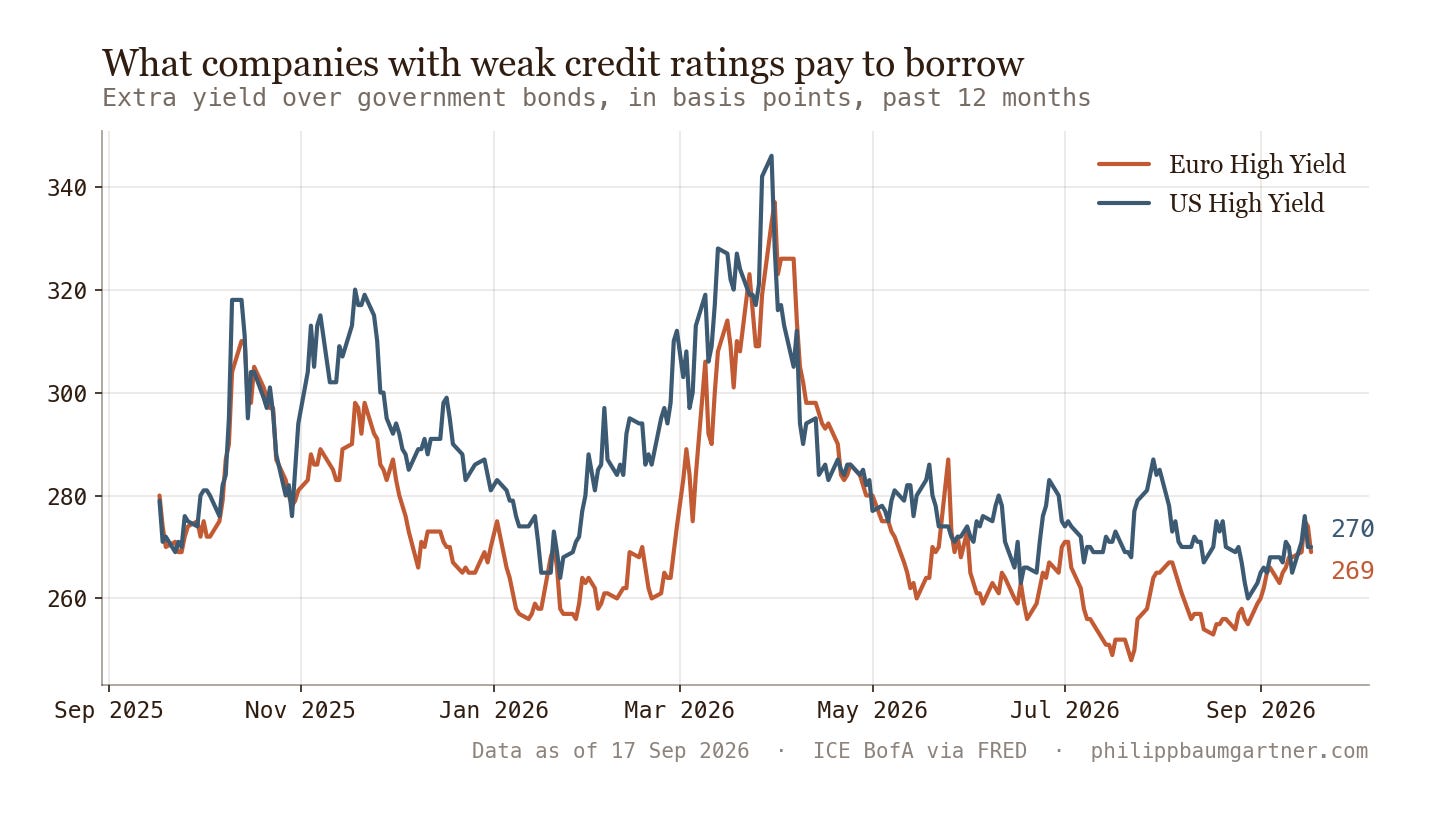
So a European bond fund earned more this week, and essentially all of it came from the government part. The thing you are taking risk for is still priced as though nothing could go wrong — in a week when three central banks tightened and France lost a rating notch.
The Onchain Pour
Bitcoin spent Tuesday and Wednesday falling through support near 76,000 dollars, touched roughly 74,800, failed to hold the breakdown, and finished the week near 81,000 — up 5.7 per cent against the level published here last Sunday. Ether gained 6.6 per cent to around 2,612 and closed its best third quarter on record.
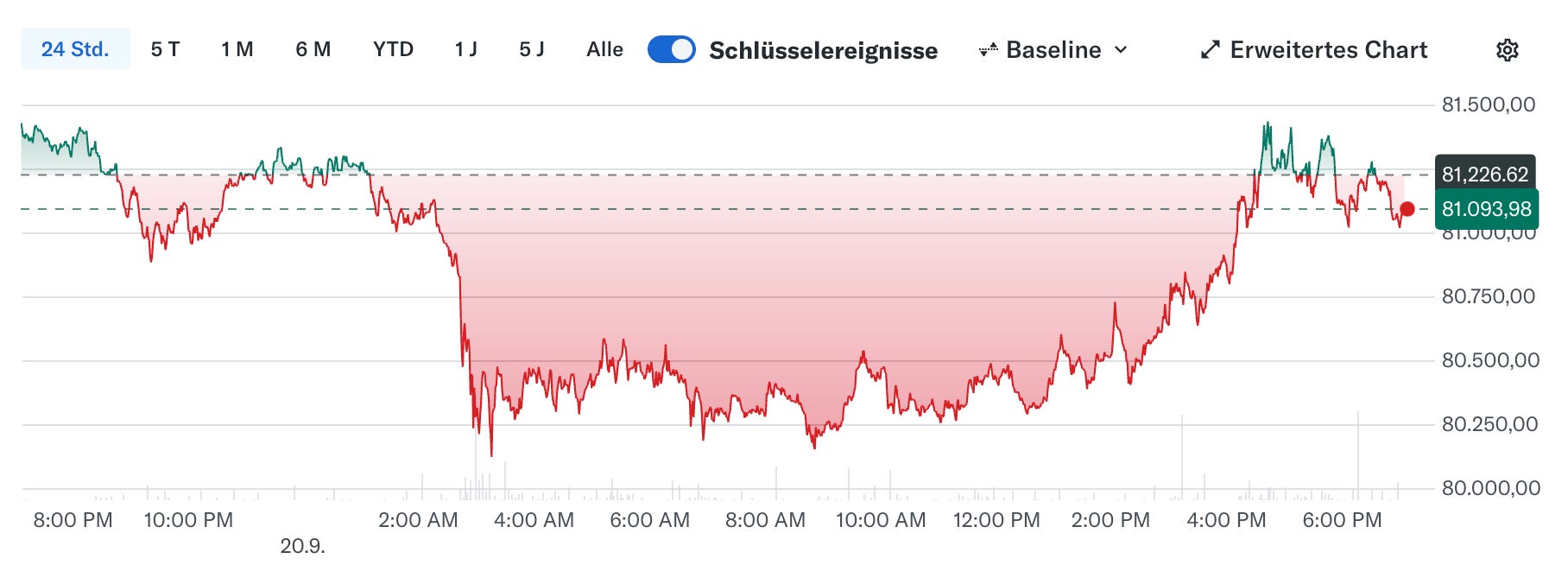
The flows explain the shape. American bitcoin funds lost roughly 746 million dollars on Tuesday and Wednesday, then took in about 593 million across Thursday and Friday, including 433 million on Friday alone. Traders who had sold below 76,000 had to buy back, which amplified everything.
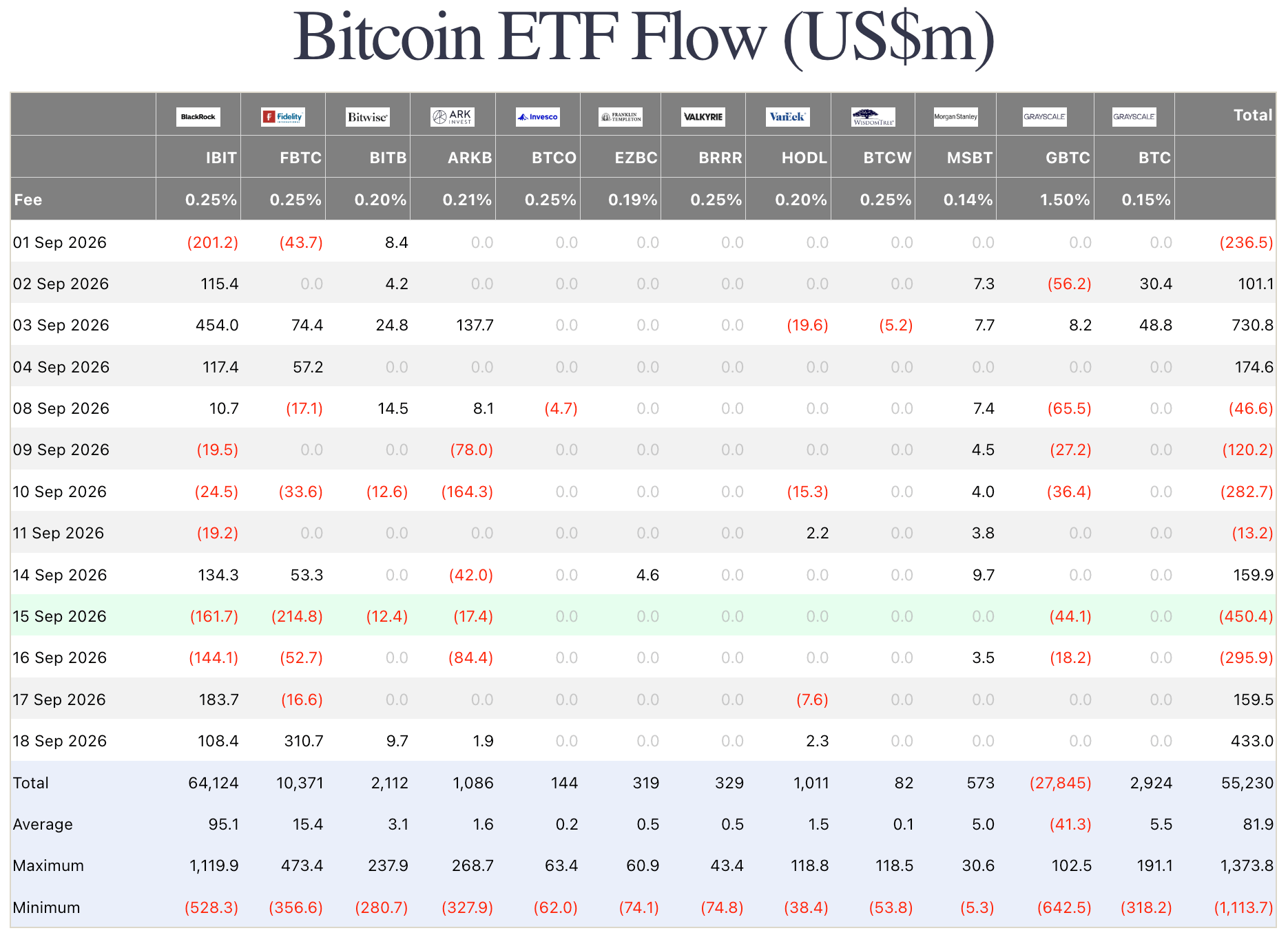
Two explanations are circulating. One points to the Securities and Exchange Commission, which issued an order on tokenised securities late in the week. The other points to the Gulf, where drone attacks on Saudi infrastructure and a possible American operation against Houthi forces have people thinking about wealth that can leave a country quickly. Fund flow data records the wrapper, not the buyer’s nationality, so neither can be proven from the numbers alone.
The Week Ahead
No central bank meets this week, which makes it the week the data either supports what three of them just did, or doesn’t.
Underneath the releases sits something quieter. The US Treasury sells two-year, five-year and seven-year notes on Tuesday, Wednesday and Thursday — precisely the maturities that moved hardest last week. Weak demand at any of the three would tell you the repricing has further to run.
Monday, 03:15 — China’s benchmark lending rate.
Expected to stay at 3.0 per cent. China is still exporting falling prices into a world that is importing rising ones.
Tuesday, 16:00 — Euro area consumer confidence.
Last at −15.5, expected to weaken to −16.5. The first read on how households took the energy bill.
Tuesday, 19:00 — US two-year note auction.
The previous sale went at 4.204 per cent. Two-year yields have since risen to 4.74. This is where you find out who wants them at the new price.
Wednesday, 09:15 to 15:45 — flash purchasing manager surveys.
France, Germany, the euro area, Britain and the United States in sequence. These ask companies directly whether business got better or worse this month, which makes them the earliest signal of a slowdown. German services sat at 49.7 last month, just below the line that separates growth from contraction.
Wednesday, 11:30 — German thirty-year Bund auction.
Last cleared at 3.90 per cent. Europe’s long end has been the calm one, and this is the test.
Thursday, 14:30 — US jobless claims.
Last week’s 196,000 was the lowest in 57 years. Economists expect 202,000. A second week that low would make the Fed’s hawkishness considerably easier to defend.
Thursday, 16:00 — US new home sales.
The previous month fell 10.5 per cent. Expected at 610,000. Housing is where higher borrowing costs land first, and last week’s starts and permits both disappointed.
Thursday, time to be confirmed — the Trump–Xi summit.
Scott Bessent and He Lifeng have been negotiating over trade, artificial intelligence and rare earths in the run-up.
Friday, 14:30 — US durable goods orders.
Last month rose 1.1 per cent, and economists expect a fall of 0.5 per cent. Orders for machines and aircraft say what companies are willing to commit to eighteen months out.
Friday, 16:00 — University of Michigan consumer sentiment, final.
The number to watch this week. The preliminary reading was 51.7 and the final is expected at 47.8 — a collapse of nearly four points within the same month. Inflation expectations for the year ahead are seen at 4.6 per cent against 4.0 per cent in the first cut.
☕ Last Sip
Last week this letter said three central banks were leaning the same way for the first time since 2022. All three have now moved, and none of them surprised anybody.
What is awkward is what the bond market did with it. Short-term borrowing costs rose, long-term costs did not, and the gap between them is the narrowest this year. That shape has a reputation, and it is not a flattering one.
Oil came off its peak, gold rose, and American shares ended roughly where they started. Enjoy what is left of the weekend. See you next Sunday.
Sources
Market levels from CNBC, Yahoo Finance, Investrade, Trading Economics, ANSA, Il Sole 24 Ore Radiocor and Rio Times. Economic releases from the US Census Bureau, the Department of Labor and the Office for National Statistics. Credit and euro curve data from ICE BofA indices via FRED and the ECB Data Portal, as of 17 September. Weekly changes are measured against the levels published in edition #8. Analysis and personal opinion — never investment advice.