
Market data as of Friday 7 August. News and events to Saturday 8 August, 22:40 CET.
The Week in One Sip
At 14:30 on Friday the US Bureau of Labor Statistics reported that the American economy shed 23,000 jobs in July. Economists had expected a gain of about 80,000. Within minutes the S&P 500, the index of America’s 500 largest listed companies, was heading for a record close.
That looks strange until you know what the argument in markets has been about all year. The US central bank has spent 2026 debating whether to raise borrowing costs, not lower them, and three of its officials voted for a rise in July. A labour market shedding jobs makes that case much harder, and cheaper borrowing lifts share prices. A bad number for workers arrived as a good number for shareholders.
Underneath ran a second story that never resolved. Oil fell hard early in the week as Iran and Oman negotiated a corridor through the Strait of Hormuz, the waterway that carried roughly a fifth of the world’s oil before the war.
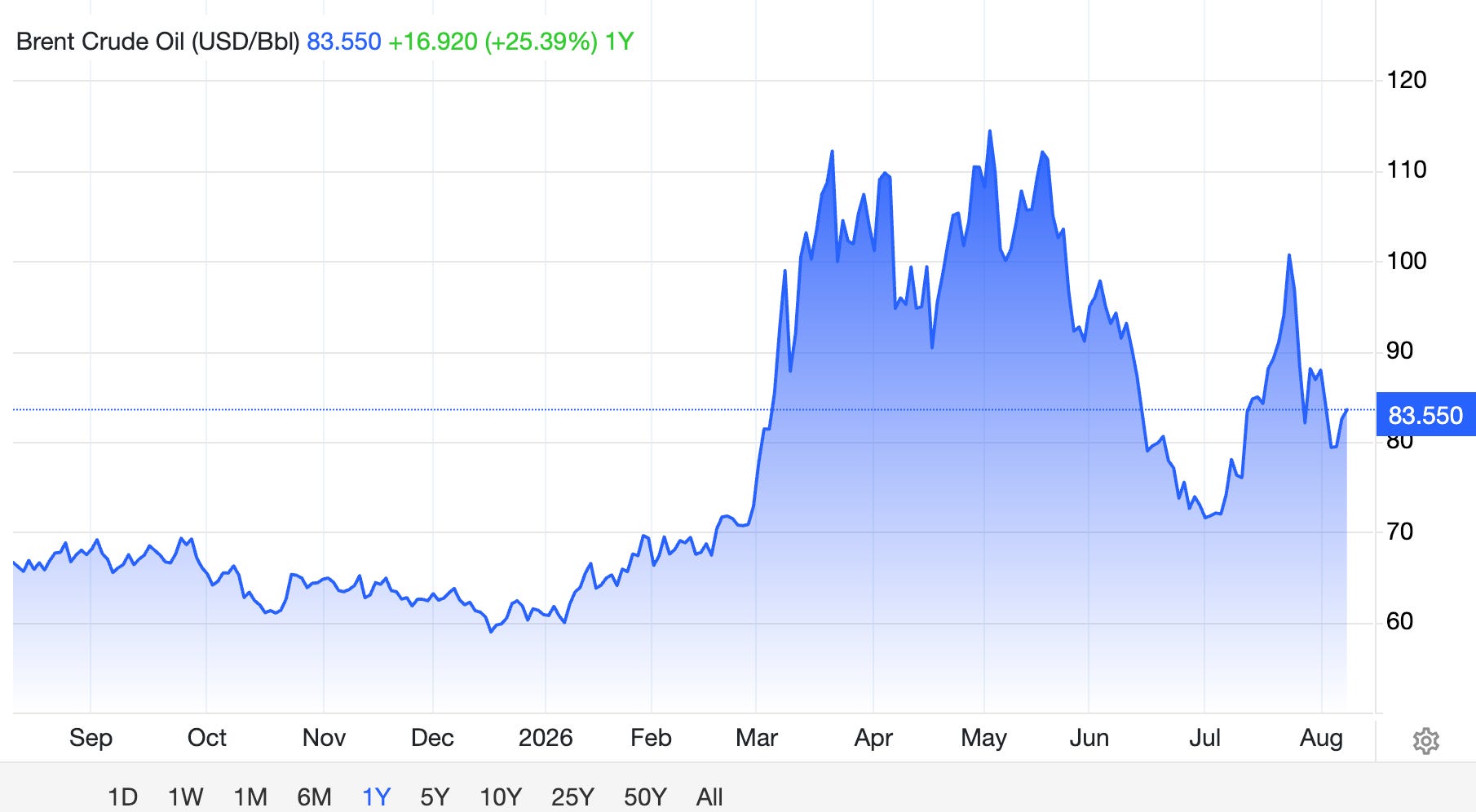
Then Iran published its terms, they were stricter than anyone expected, and oil turned back up on Friday.
The Scoreboard
Look for a clean split. Everything that benefits from cheaper money rose, everything priced off the dollar or off oil went the other way, and one market broke ranks entirely.
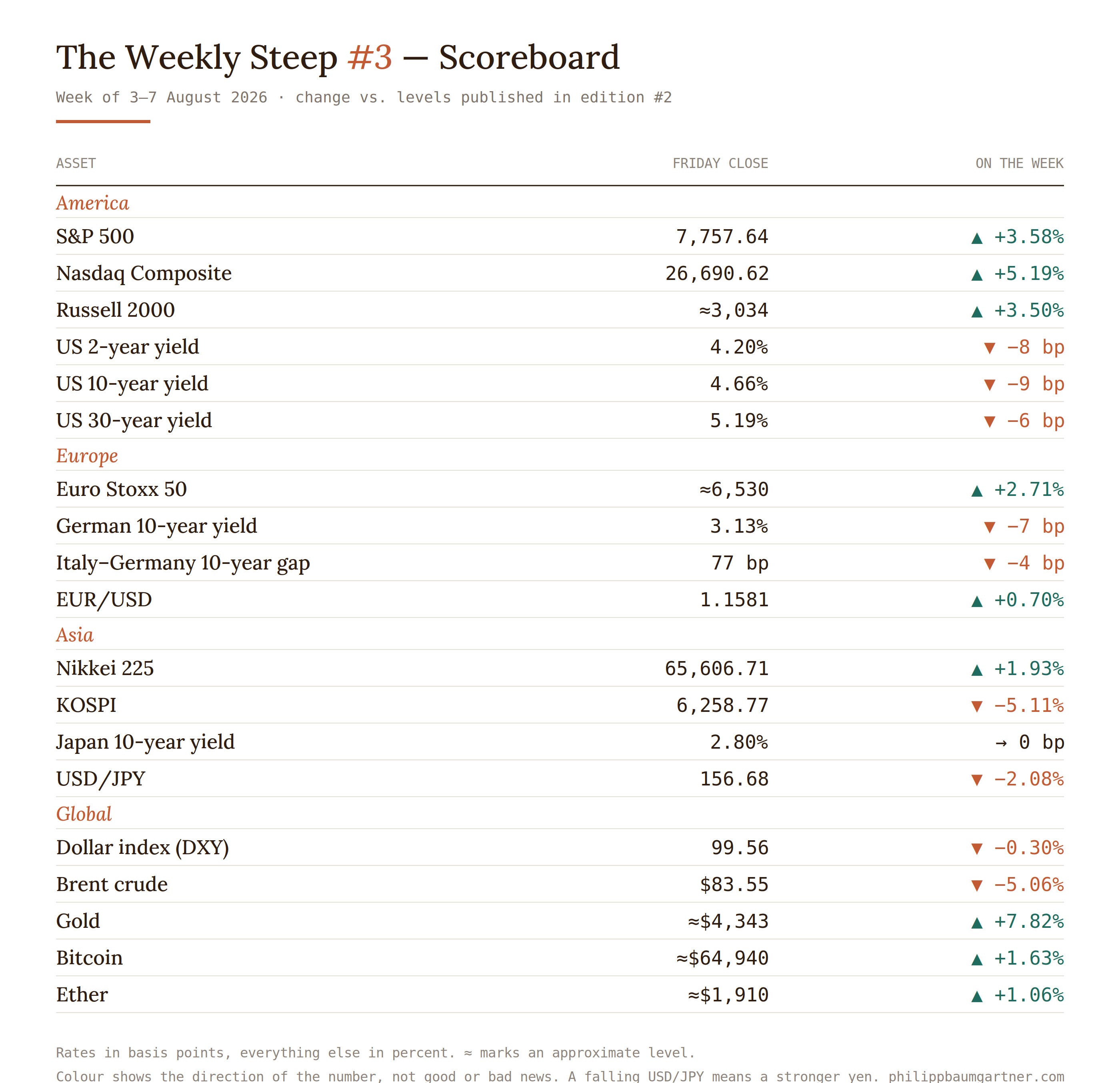
Reading the board.
America ran the week: the S&P 500 up 3.6% to a record 7,757.64, the Nasdaq 5.2% as chip stocks bounced, and the Russell 2000 which consists of smaller, domestic companies rather than global technology, keeping pace at 3.5%. Government borrowing costs fell across every maturity.
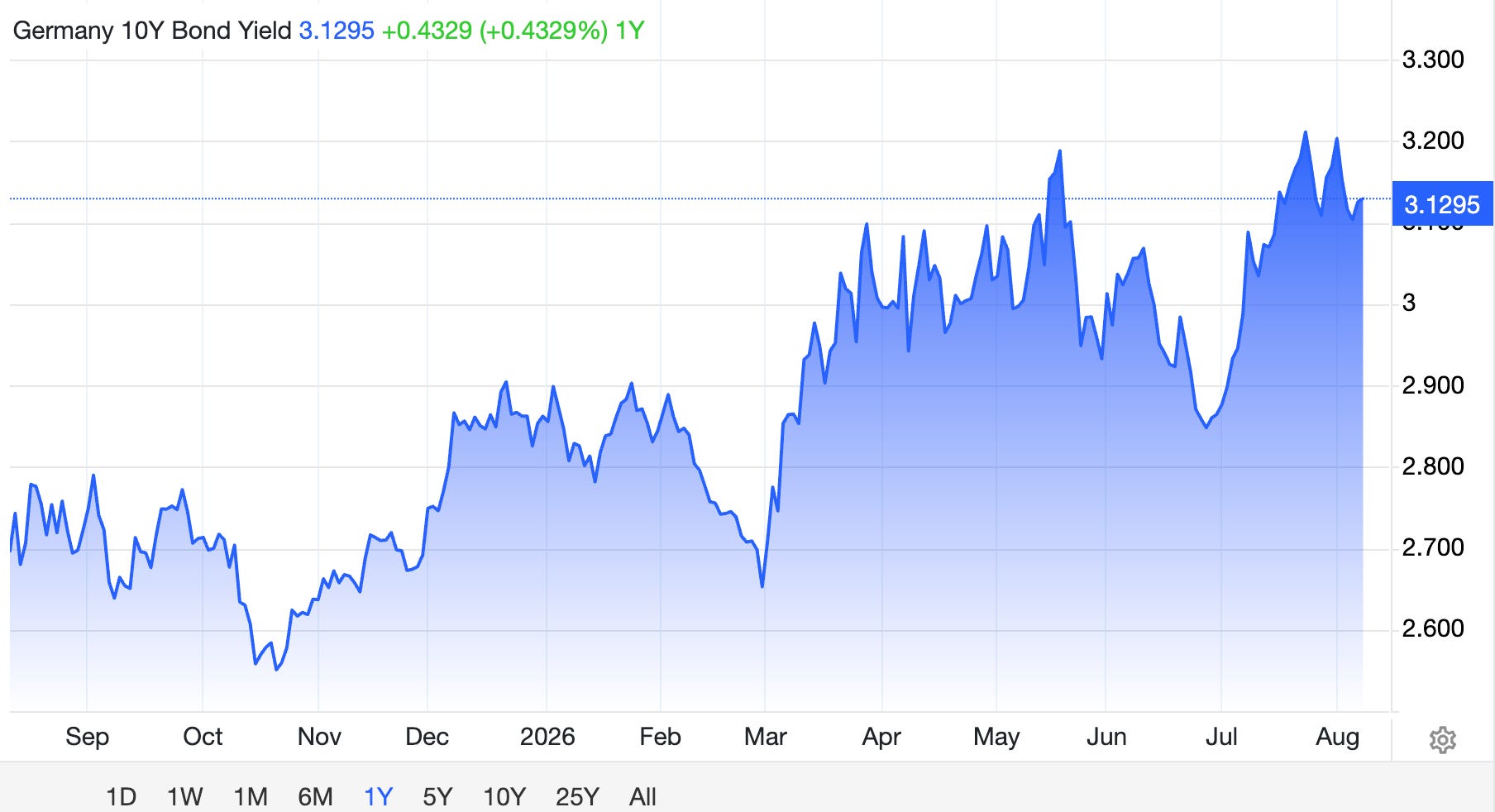
Europe followed rather than led. The gap between what Italy and Germany pay to borrow for ten years narrowed to 77 basis points, which is the market saying it sees no particular stress in the eurozone.
Asia is where the calm number hides everything. Japan’s Nikkei rose 1.9% while the yen strengthened 2.1%. Korea’s KOSPI fell 5.1% in the same week the S&P hit a record. Gold did the most work of anything on the board, up 7.8% to around $4,343 an ounce.
1. The revisions mattered more than the headline
July’s jobs report was bad. What it revealed about May and June was worse.
A monthly jobs report carries two things: what happened last month, and a correction to what you were told about the months before. Almost all the coverage goes to the first. The money is usually in the second.
July came in at minus 23,000. But May and June were marked down too, heavily enough that average monthly job creation over the past year has collapsed to roughly 34,000. That reframes everything. This wasn’t one weak month interrupting a strong run — the run was already far weaker than the official numbers showed.
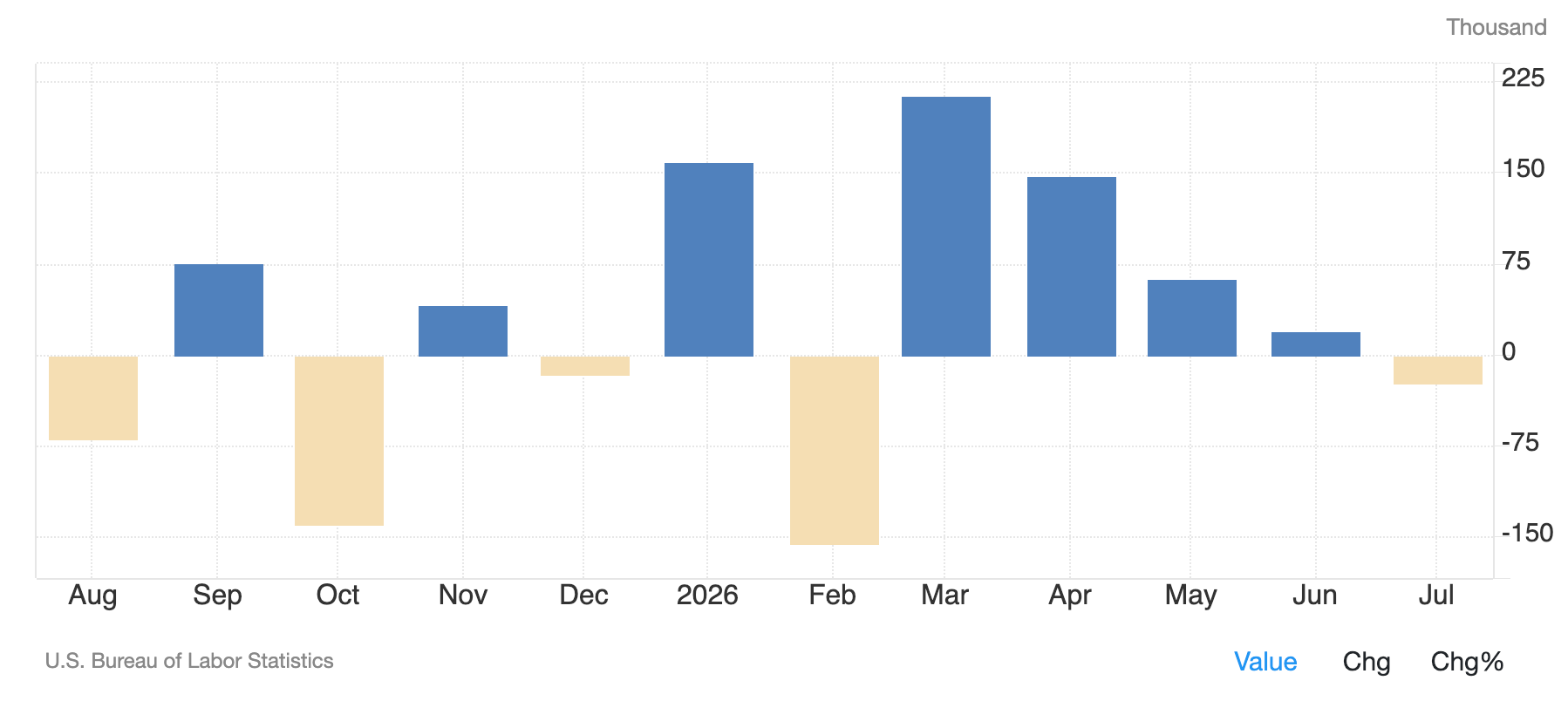
One detail explains a headline that otherwise makes no sense. The unemployment rate fell, to 4.1%, in a month when the economy lost jobs. The rate only counts people actively looking for work. The share of adults working or looking dropped to 61.4%, down 0.7 points this year, as close to 1.4 million people stopped looking. Leaving the labour force takes you out of the count.
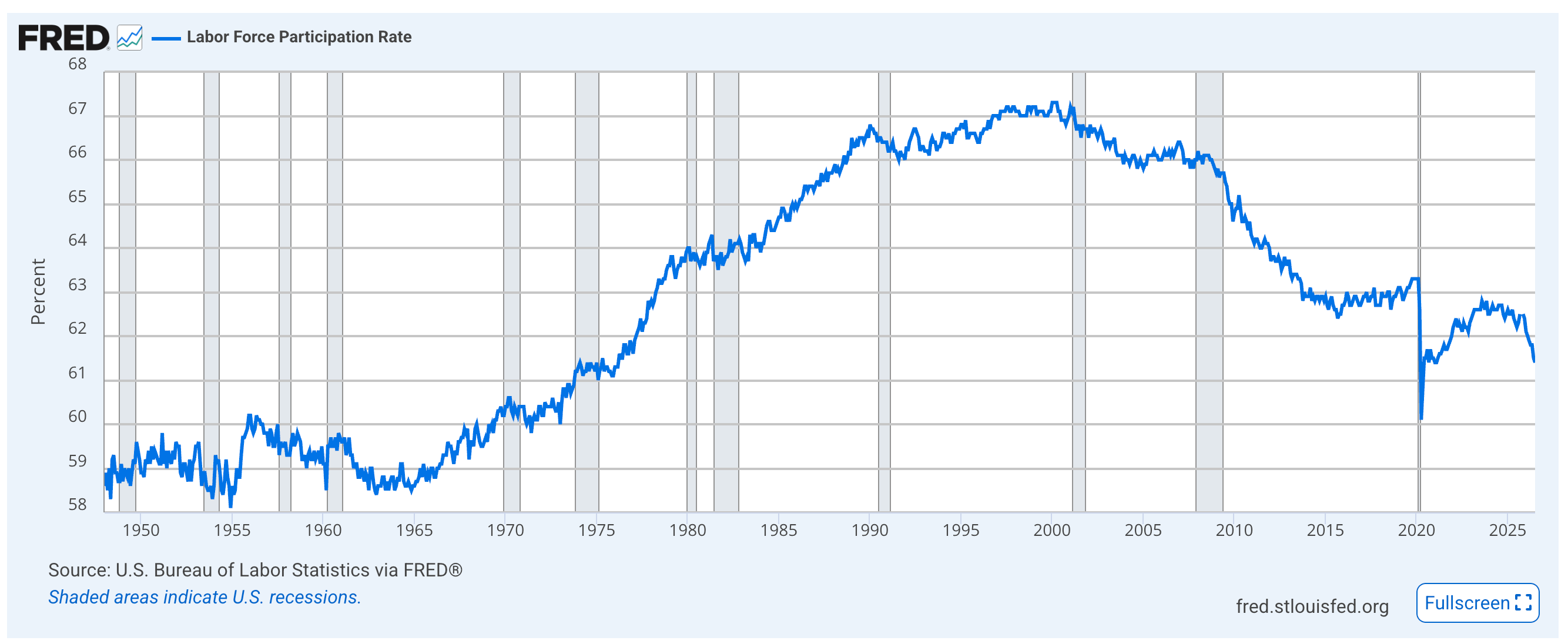
So the headline flattered a genuinely poor month. Wages agreed: average hourly pay rose 3.2% over the year against the 3.5% expected. If you’ve been reading that the American labour market is fine, that claim got harder to make this week.
2. Record profits, and where they came from
Company earnings are running at levels not seen since the pandemic rebound. A meaningful slice is companies revaluing what they own.
With 88% of the S&P 500 reported, earnings are up more than 50% on the same quarter last year against an expectation of 23%. Margins are at a record. On the face of it, an extraordinary boom.
Two numbers deserve a second look. Alphabet booked roughly $98 billion in gains on investments it holds but hasn’t sold, and Amazon around $53 billion from its stake in Anthropic. Both are legitimate under accounting rules. Neither is money from selling anything to a customer. Strip them out and growth is still above 30%, so the boom survives — but a profit from marking up a shareholding behaves very differently in a downturn than a profit from sales.
Look one layer below the index heavyweights and it gets uneven. United Wholesale Mortgage, the largest mortgage lender in the United States, fell 34.8% in a single session on 6 August to an all-time low. Lumber has traded down eleven days running, its longest losing streak since April 2024. Housing and construction are not having the year the index is having.
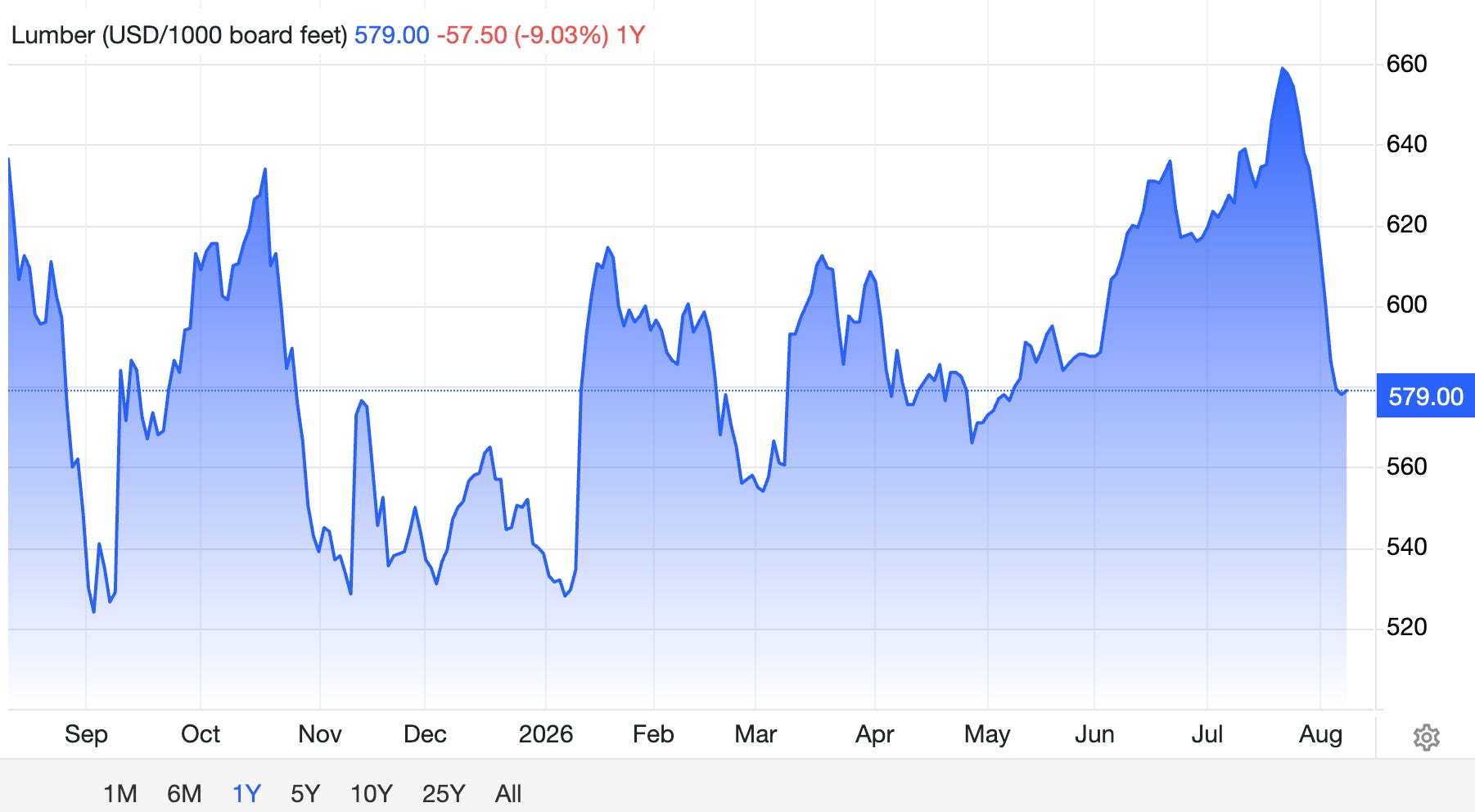
Both things are true at once, and the distance between them is what to watch.
3. Korea fell five percent while everyone else rose
A memory-chip selloff took Korea’s market down hard in a global rally — and Korean savers are voting with their money.
Korea’s KOSPI closed Friday at 6,258.77, down 5.1% on the week. The S&P 500 rose 3.6% over the same days. That’s an unusually wide gap between two markets that normally move together.
The cause is concentration. Korea’s index leans heavily on two memory-chip makers, and memory had a bad week — SK Hynix dropped 4.8% on Friday alone, extending a selloff that has run for weeks. When two companies carry that much of an index, their bad month is the country’s bad month.
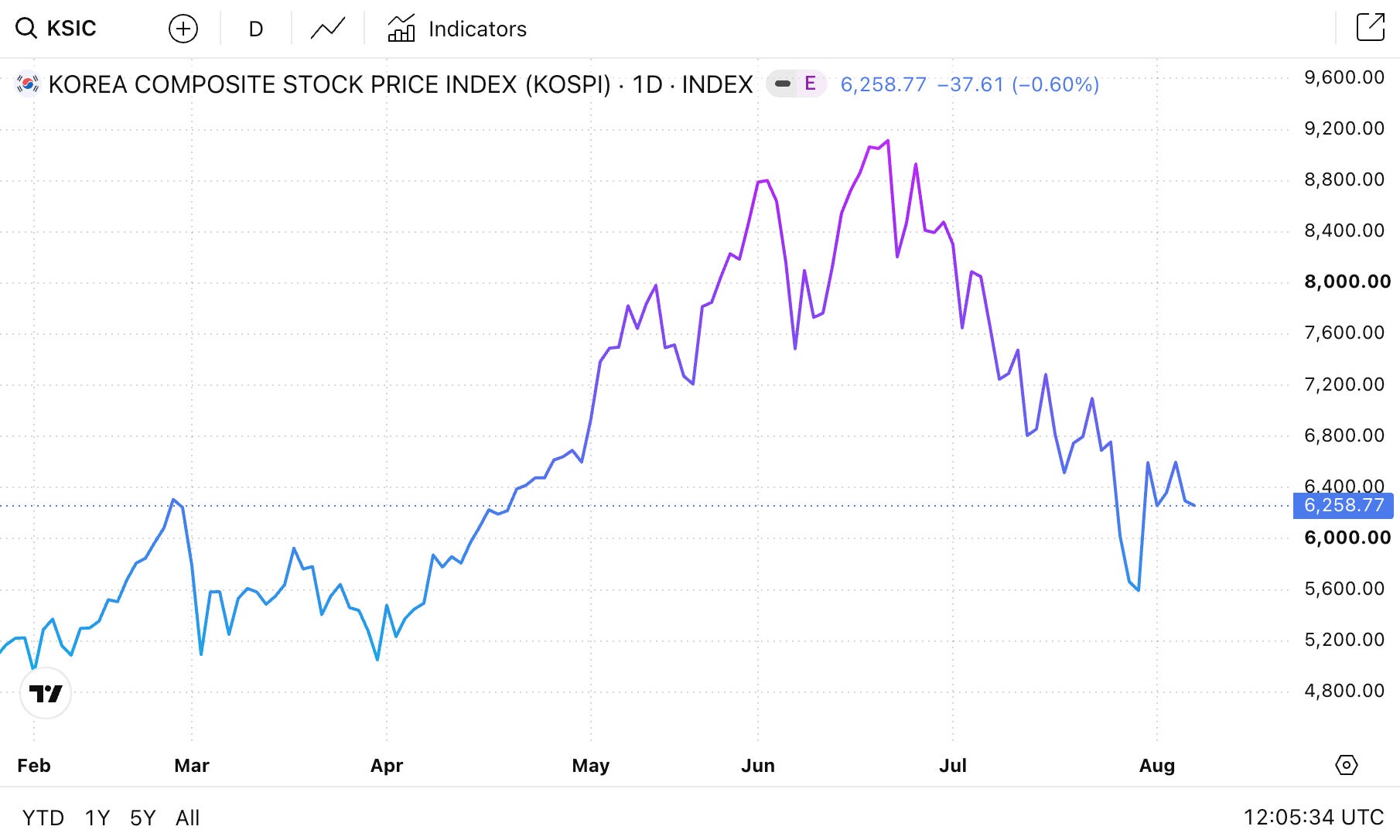
What makes it more than a market story is where Korean money went instead. Retail investors in Korea bought $4.6 billion of US shares in July, roughly seven times June’s figure. Ordinary savers are moving out of their home market into someone else’s. That’s slow-moving rather than a crisis, but a country whose savers prefer foreign assets has a harder time funding its own companies.
4. The currency two governments moved
The US and Japan bought yen together for the first time since 1998, and the American reason is about American borrowing costs.
When a currency falls too far, a government can step into the market and buy it with its own reserves. It’s a blunt tool and usually a national one. In late July it stopped being national.
Japan intervened alone on 30 July, with the yen close to 164 per dollar — roughly a forty-year low. The next day the US Treasury joined, selling euros and buying yen through the New York Fed. Coordinated intervention between the two hadn’t happened since 2011, and coordination in the direction of buying yen not since June 1998. It has held so far: the yen closed Friday at 156.68, a little over two percent stronger on the week.
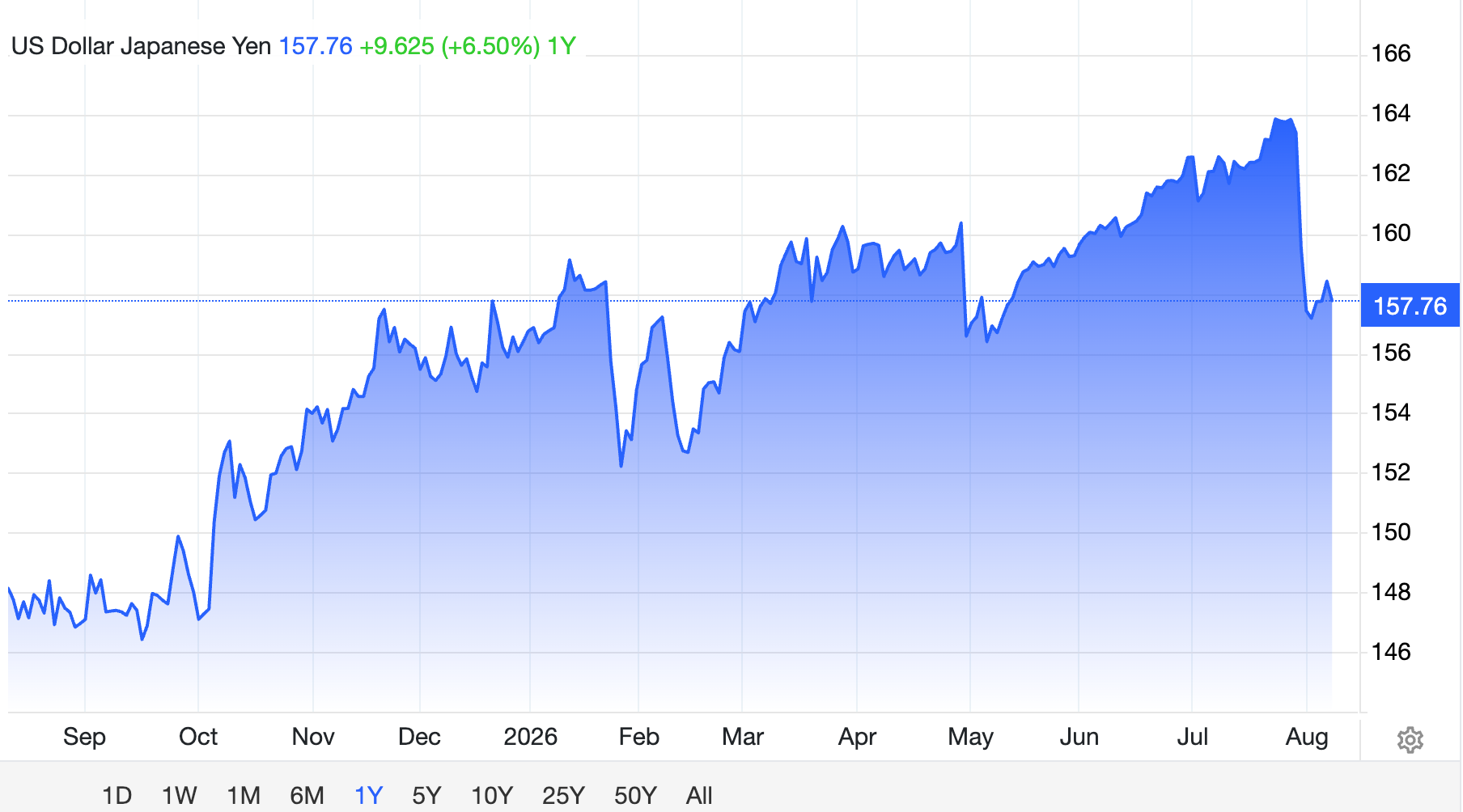
The interesting part is the American motive. A weak yen and rising Japanese interest rates travel together, and Japanese investors are among the largest owners of US government debt. If yields at home rise far enough, that money goes back to Tokyo and America pays more to borrow. Washington had a domestic reason to defend the yen.
Intervention buys time. The gap in interest rates that pushed the yen down is still there.
Data Check
Everything pointed the same way before Friday. Job openings, private payrolls and the services survey all came in below expectations, and then the employment report confirmed the direction.
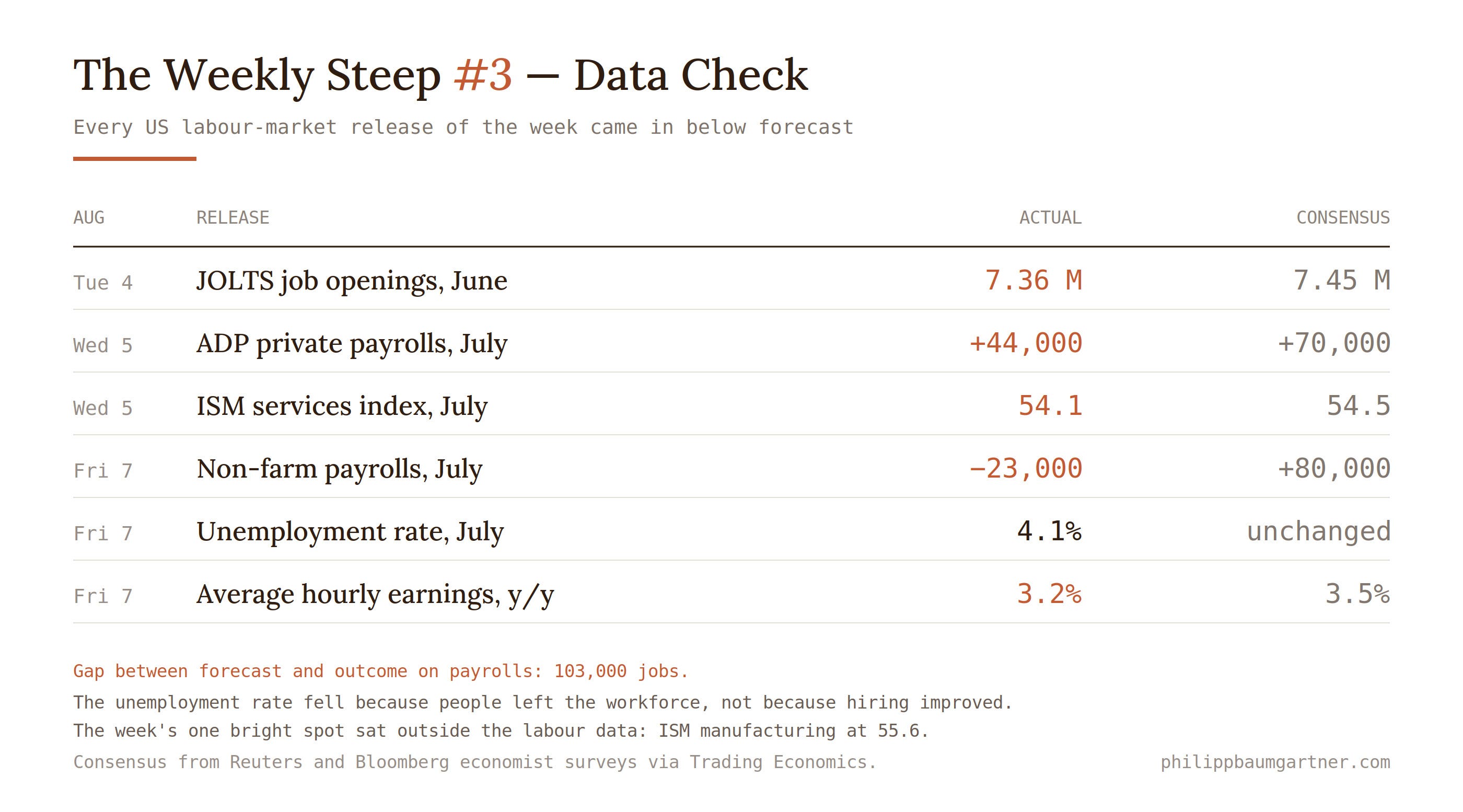
Consensus is the median forecast from Reuters and Bloomberg surveys of economists, published free by Trading Economics. Markets move on the gap between forecast and outcome.
The payrolls miss was the largest surprise of the week by a distance — 103,000 jobs between forecast and outcome. Worth remembering when the unemployment rate gets quoted on its own over the coming months.
The Credit Grind
One number: what investors charge America’s weakest-rated companies for the risk that they fail to repay.
It fell to 271 basis points this week — 2.71 percentage points of extra yield above what the US government pays to borrow. That is the 8th percentile of the past year, meaning investors were paid more than this in 92% of the last twelve months. They are accepting close to the least compensation for corporate default risk on offer in a year, and they accepted less of it this week than last.
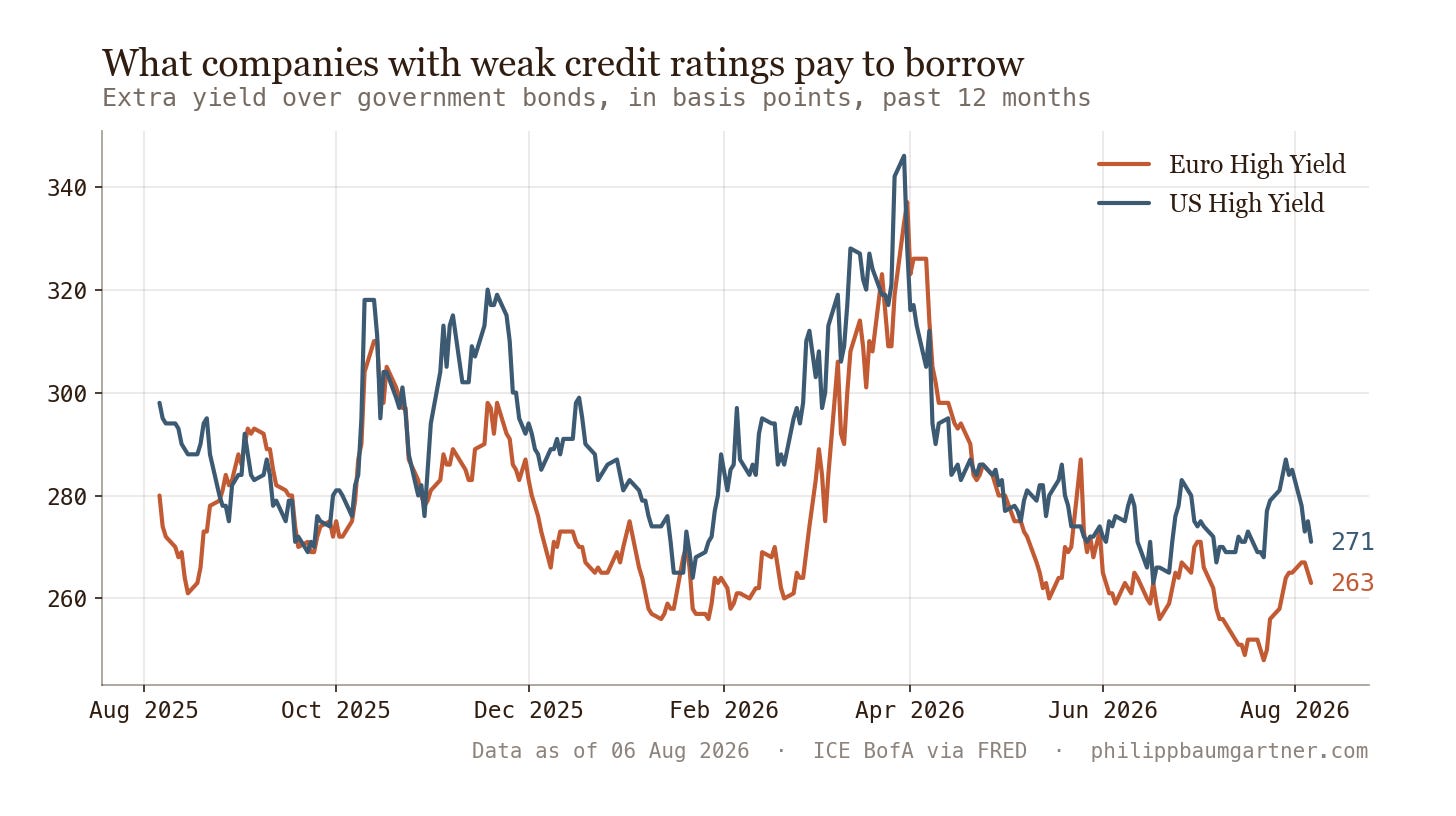
Extra yield over government bonds for high yield borrowers, past twelve months. Pipeline run of 6 August 2026, ICE BofA indices via FRED.
One corner went the other way. Euro-denominated debt from emerging-market companies widened 9 basis points — the only part of this market where investors demanded more. Those borrowers sit closest to the energy story, and Hormuz moved against them.
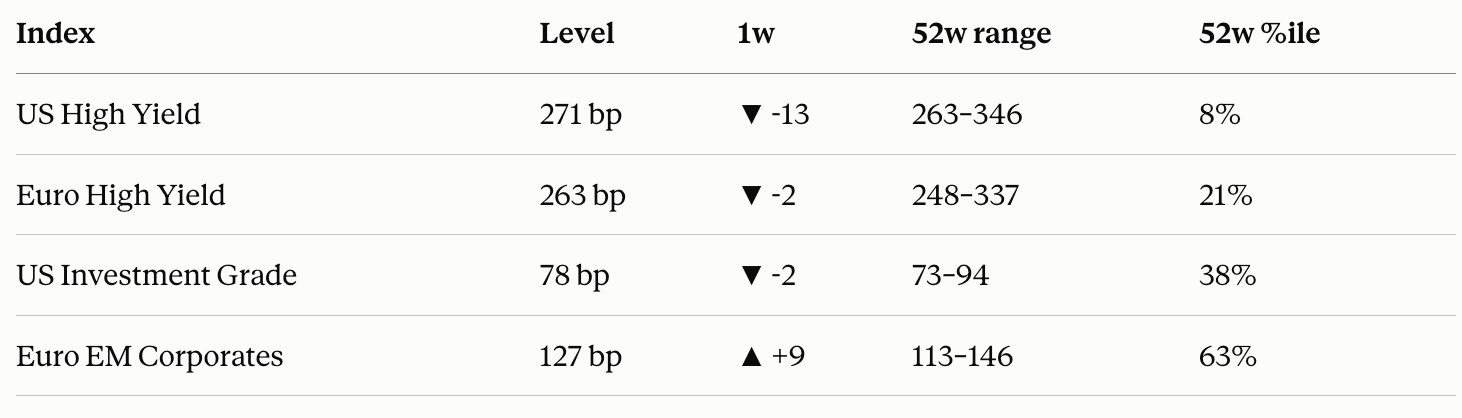
High yield covers companies rated below investment grade. Levels are 6 August, one day behind everything else on the Scoreboard.
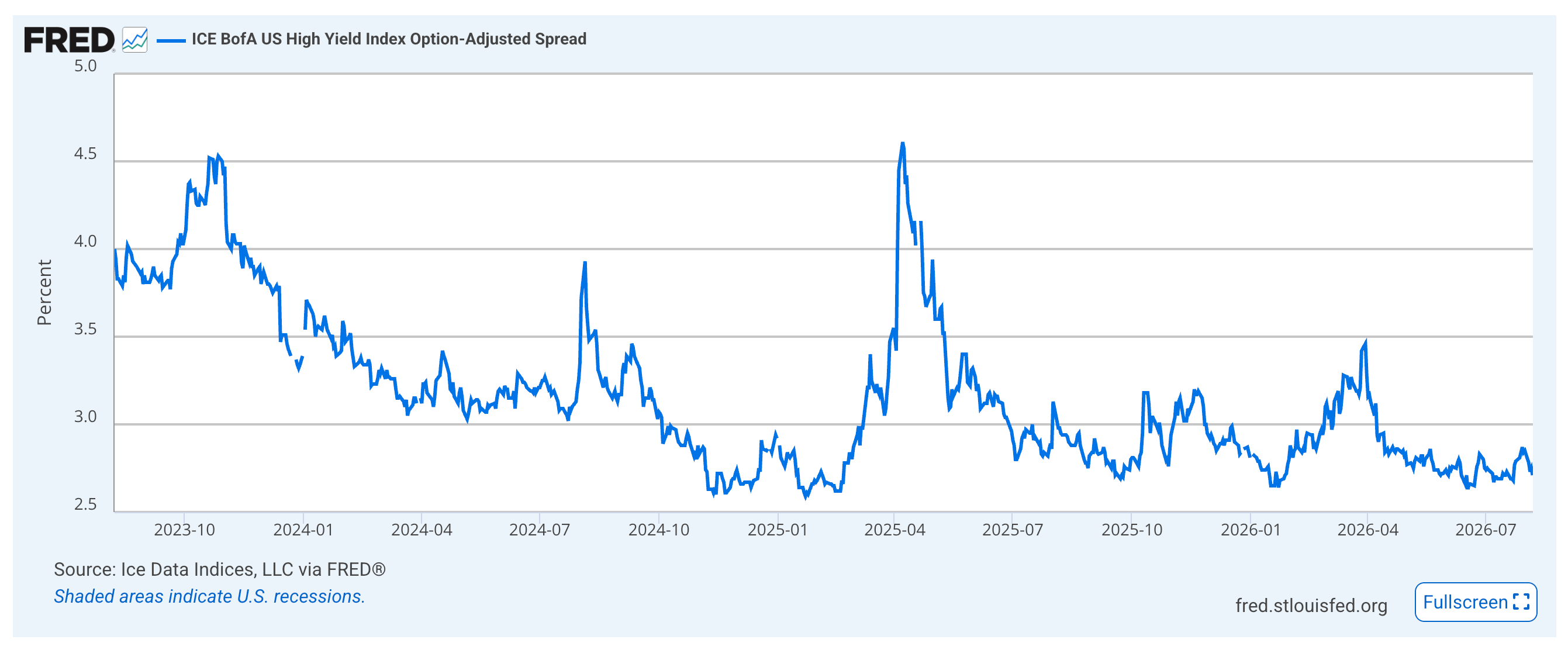
If you hold a corporate bond fund, this is what you are being paid to take risk — and right now it is thin.
The Onchain Pour
Bitcoin went nowhere in particular, which given everything else happening is itself informative.
Bitcoin ended Friday around $64,940, up 1.6% on the week after touching $65,300 on the jobs report. Ether finished near $1,910. Funds that hold bitcoin directly took money in every single day of the week.
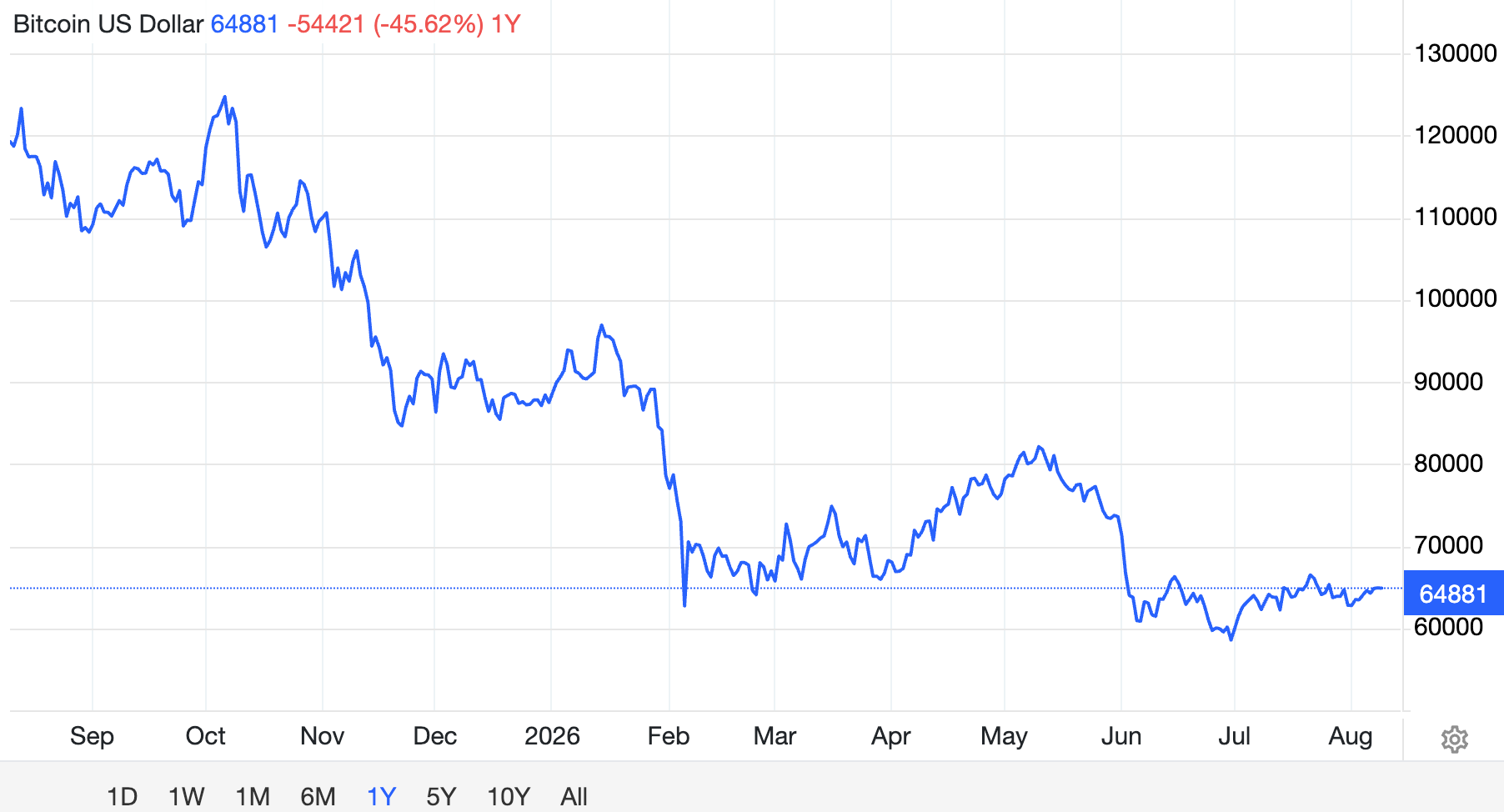
The structural news mattered more. The US Treasury sanctioned two Iranian exchanges for allegedly moving money for the Revolutionary Guard — the same conflict driving oil, arriving in crypto. Legislation to give the industry clear US rules hit another setback, with Senator Lummis promising to keep pushing. And developers are arguing over a proposed change to Bitcoin’s rules, BIP-110, openly enough that a network split is being discussed.
One thing for anyone holding coins themselves: losses from the Coldcard hardware wallet exploit have passed $111 million.
The Week Ahead
Monday 10 August.
Quiet. Japan’s central bank publishes the summary of opinions from its July meeting at 01:50, worth a glance for how close another rate rise is.
Tuesday 11 August.
Australia’s central bank decides at 06:30, expected to hold at 4.35%. US small-business optimism at 12:00 (consensus 97.1). Existing home sales at 16:00 (consensus 4.07 million) matter more than usual after this week’s mortgage-sector trouble. A three-year debt auction at 19:00 gives the first read on demand since the jobs shock.
Wednesday 12 August — the one that counts. US consumer price inflation for July, 14:30.
Consensus is 3.4% for the year, down from 3.5%, with the core measure that strips out food and energy at 2.5%. This decides whether Friday’s jobs report ended the rate-rise debate or merely paused it; a hot print puts September back in play immediately. Germany’s final July inflation at 08:00. The IEA oil market report at 11:00 and OPEC’s monthly report later both carry extra weight with Hormuz unresolved.
Thursday 13 August.
UK second-quarter growth at 08:00 (consensus 0.4%, down from 0.6%). US producer prices at 14:30 — the inflation companies face before it reaches shop shelves, consensus 0.2% on the core measure — alongside weekly jobless claims at 198,000. Then Hammack speaks at 14:15. She voted to raise rates in July, so how she sounds after a negative jobs print tells you how firm that camp still is. Barkin follows at 14:40.
Friday 14 August.
Euro area second-quarter growth, second estimate, at 11:00, consensus confirming the 0.4% flash. US retail sales at 14:30, consensus 0.2%, the cleanest read on whether households keep spending while the job market softens. Michigan consumer sentiment at 16:00 (consensus 54, down from 55.2).
Unscheduled and larger than anything on that list: Iran’s parliament is reviewing the draft terms for reopening the Strait of Hormuz.
☕ Last Sip
Two weeks ago the question was whether the US central bank would raise rates in September. After Friday that mostly answers itself, which loads the whole week onto Wednesday’s inflation number.
Enjoy the quiet part of August while it lasts. Bis nächsten Sonntag zur nächsten Folge von The Weekly Steep.
Sources
Market levels: Trading Economics for indices, yields, currencies and commodities; Reuters and CNBC for the US closes; Il Sole 24 Ore for the Italian–German spread. Economic releases: US Bureau of Labor Statistics, Eurostat, Trading Economics calendar. Credit: ICE BofA indices via FRED, from my own pipeline. Onchain: Cointelegraph and Coinbase.
Weekly changes are measured against the levels published in edition #2. Analysis and personal opinion — never investment advice.